Overcoming the Global Growth Paradox: Scaling Cross-Border AP with an Invoice OCR Enterprise System
Overcoming the Global Growth Paradox: Scaling Cross-Border AP with an Invoice OCR Enterprise System
Don't let foreign invoices stall your international expansion. Discover how AI-powered Invoice OCR dismantles the "Global Growth Paradox" by automating multilingual data extraction, eliminating costly manual errors and language barriers.
min. read
April 15, 2026
In the race to capture international markets, most enterprises aggressively optimize their sales pipelines, global logistics, and localized marketing efforts. Yet, a silent "growth tax" often accumulates in the back office, stifling scalability. As businesses expand into regions like Germany, France, and beyond, they are instantly met with a deluge of multilingual documents. These include varied invoices, complex tax filings, and customs declarations that traditional automation simply cannot parse.
This creates the Global Growth Paradox: the more you succeed abroad, the more your manual finance processes threaten to pull you under. To dismantle this barrier, global CFOs and Operations Directors must deploy a robust Invoice OCR enterprise solution capable of intelligent, cross-border financial data extraction.
What is the True Cost of Cross-Border Invoice Processing?
The true cost of processing a single cross-border invoice manually fluctuates between $15 and $25 in labor alone. While a familiar-language invoice takes 4 to 6 minutes to process, foreign documents with complex regional tax codes double that processing time, creating massive operational bottlenecks as transaction volumes scale.
When you scale those figures to thousands of documents monthly, you aren't just looking at an administrative hurdle; you're looking at a multi-million dollar leak. Manual entry is a slow-motion disaster for international teams, heavily characterized by two major friction points:
The Translation Bottleneck: Staff inevitably struggle to locate critical data points like the "Total Due" or specific regional "Tax ID" numbers when navigating unfamiliar languages and complex tax codes (such as European VAT or Indian GST).
The Compliance Gap: A 3.5% error rate is the accepted industry standard for manual data entry. In a cross-border context, a typo in a currency conversion or a misread date format (confusing DD/MM/YYYY with MM/DD/YYYY) can lead to catastrophic audit failures and severe regulatory penalties.
Why Does Legacy OCR Fail at Multilingual Documents?
Legacy OCR fails at multilingual documents because it acts as a "digital photocopier" that recognizes pixel shapes rather than semantic context. It lacks the underlying linguistic logic required to interpret compound foreign words, parse dynamic international formatting, or accurately distinguish between regional currency and decimal notations.
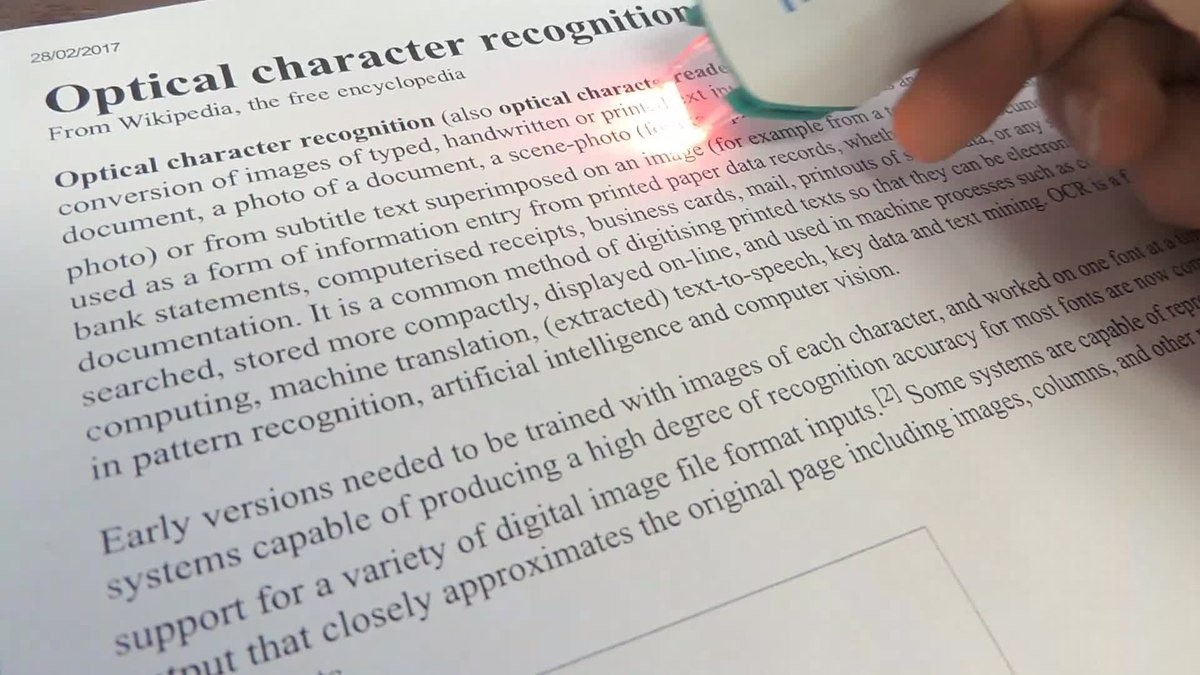
Many firms attempt to solve their cross-border AP challenges by relying on standard Optical Character Recognition (OCR) tools. However, when an outdated system is confronted with a French facture or a German Rechnung, the technology rapidly breaks down.
An outdated OCR accounting automated workflow struggles across three specific dimensions:
Dynamic Layouts: Unlike standardized American invoices, European and Asian invoicing standards often place line-item details and bank coordinates in entirely different, unpredictable zones on the page.
Linguistic Density (Compound Words): German business terminology, for example, can be incredibly linguistically dense. "Dumb" OCR routinely mischaracterizes these dense headers, leading to corrupted data outputs.
Currency and Numerical Ambiguity: Distinguishing between regional currency symbols and varying decimal notations (e.g., using commas instead of periods for decimal points) often requires a human to manually "sanity check" the data, defeating the purpose of automation.
How an Invoice OCR Enterprise Architecture Enables Borderless Workflows
To truly scale, the technology must evolve from merely "reading" to actually "understanding". A modern, multilingual Intelligent Document Processing (IDP) stack serves as a highly capable financial data extraction software. By leveraging Large Language Models (LLMs) and Deep Learning, an Invoice OCR enterprise platform treats a document like a conversation rather than a rigid visual grid.
The Blueprint for Multilingual IDP
Executing a borderless AP workflow requires three foundational technological pillars:
1. Contextual Entity Extraction Instead of looking for a specific pixel coordinate, an advanced Invoice OCR enterprise platform identifies conceptual "entities". For instance, the system inherently understands that "Montant Total" on a French document and "Gesamtbetrag" on a German document both universally translate to "Total Amount". This is the hallmark of true unstructured data extraction automated at scale.
2. The Single Source of Truth (SSoT) via API Extracted data is useless if it simply sits in an email inbox. It must be delivered seamlessly via an automated data capture API in a structured format (like a JSON payload) directly into your core ERP systems—whether that is SAP, Oracle, or Microsoft Dynamics. For developers engineering this pipeline, utilizing a robust Invoice OCR API ensures clean, structured data delivery regardless of the invoice's country of origin.
3. Handling High-Volume Document Complexity
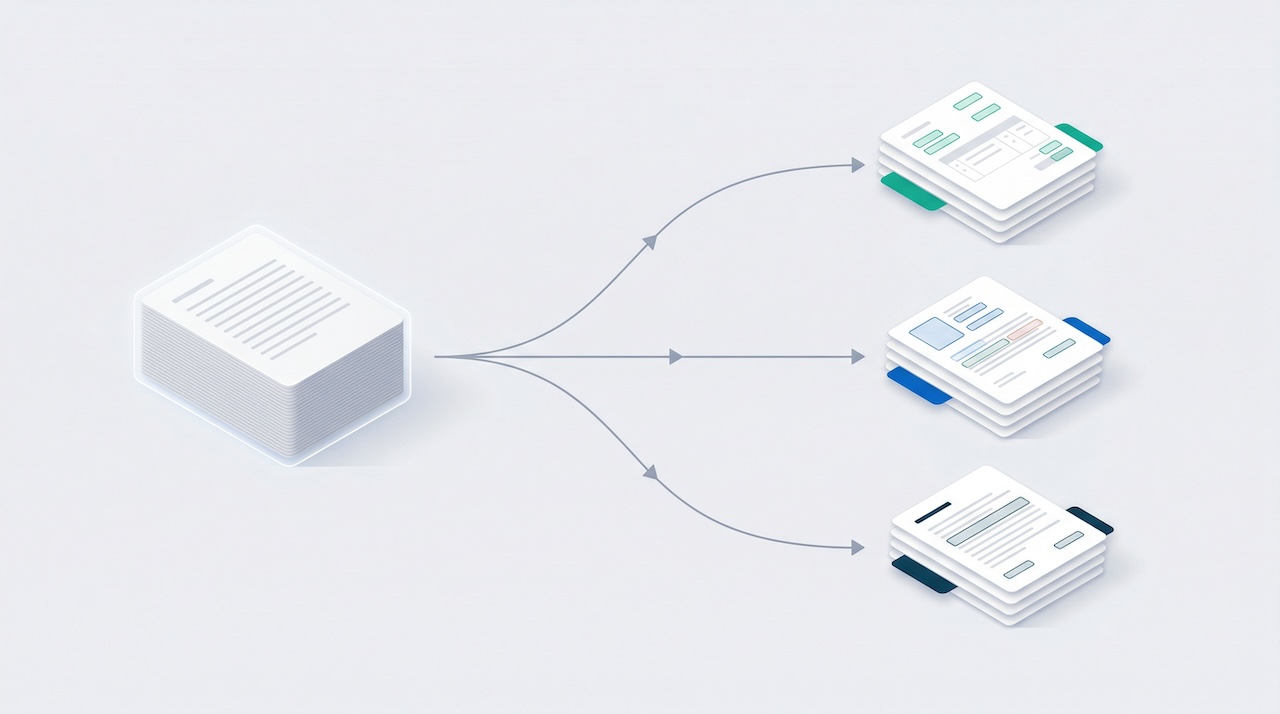
In global trade, invoices rarely arrive neatly packaged. They are often bundled with customs declarations, packing slips, and cross-border shipping labels into single, massive PDF files. An enterprise-grade workflow utilizes tools like a Document Splitter to automatically categorize and route different document types within a single batch before data extraction even begins.
Integrating Human-in-the-Loop (HITL) Validation
Does AI Replace the AP Department?
No. Efficiency in an Invoice OCR enterprise workflow does not mean removing humans; it means elevating them. Through Human-in-the-Loop (HITL) validation, accounting staff transition from manual typists to strategic "Data Auditors," intervening only when the AI flags a data point with a low-confidence score.
By utilizing intelligent data extraction software, your financial team is freed from the mundane, error-prone task of transcribing foreign languages. Instead, they apply their domain expertise only when complex exceptions occur, drastically improving both job satisfaction and processing throughput.
The Predictive Future of Global Finance
As AI models continue to aggressively evolve, we are rapidly moving toward a future where "Multilingual Document Processing" becomes entirely invisible. A mature Invoice OCR enterprise system won't just passively extract data; it will actively predict cash flow trends across different international regions. By analyzing the real-time data from incoming global invoices, these systems will soon suggest dynamic currency hedging strategies to protect profit margins.
For the modern CFO and Operations Leader, the strategic goal is entirely clear: completely remove the language barrier from the corporate balance sheet. By automating the "reading" of the world's business transactions, you eliminate the Global Growth Paradox. You free your global finance team to step away from data entry and focus exclusively on the strategy of international market dominance.
Privacy is important to us, so in accordance to our Privacy Policy, you have the option of disabling certain types of storage that may not be necessary for the basic function of the website. Blocking categories may impact your experience on the website.
Privacy is important to us, so you have the option of disabling certain types of storage that may not be necessary for the basic functioning of the website. Blocking categories may impact your experience on the website.